If you're wondering about 2 year old reading development and when to start reading books to your baby, you're asking exactly the right questions at exactly the right time. The toddler years are a magical window for building literacy foundations—not because your two-year-old needs to decode words yet, but because their brain is wiring itself for language in ways that will shape their entire reading journey.
Let's explore what reading development actually looks like at this age, when to start (spoiler: earlier than you think), and how to make story time genuinely engaging rather than a battle of wills with a wiggling toddler.
When to Start Reading Books to Baby: Earlier Than You Think
Here's something that surprises many parents: the American Academy of Pediatrics recommends reading aloud to children from birth. Yes, even before your baby can sit up, focus on pictures, or do anything besides eat, sleep, and create laundry.
Why so early? Because babies are absorbing the rhythm and melody of language long before they understand individual words. When you read to your newborn, you're teaching them that:
- Books are sources of comfort and connection (they're snuggled with you)
- Language has patterns, cadence, and musicality
- Stories have beginnings, middles, and ends
- Those squiggly marks on pages have meaning
By the time your child reaches two years old, they've ideally been hearing stories for 24 months. But if you're just starting now? That's completely fine. Two-year-olds are at a perfect developmental stage to fall in love with books.
The "Mirror Years" and Reading Development
Ages two through seven are what child development experts call the "mirror years"—when children are forming their sense of self and learning who they are in the world. This is why 2 year old reading books that reflect their own experiences back to them are so powerful. When a toddler sees a character who looks like them, acts like them, or faces challenges they recognize, it validates their experience and builds confidence.
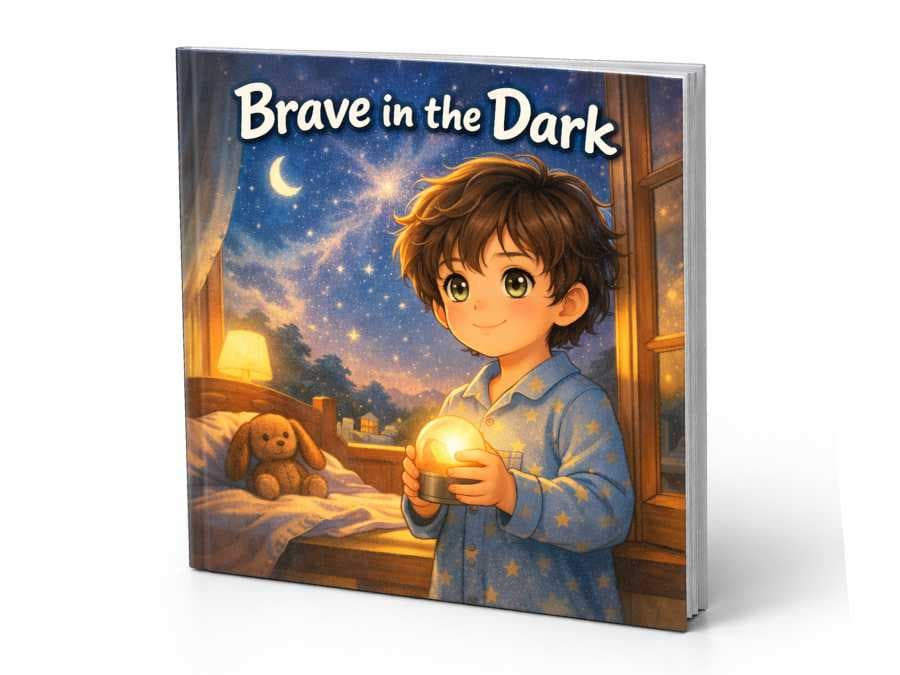
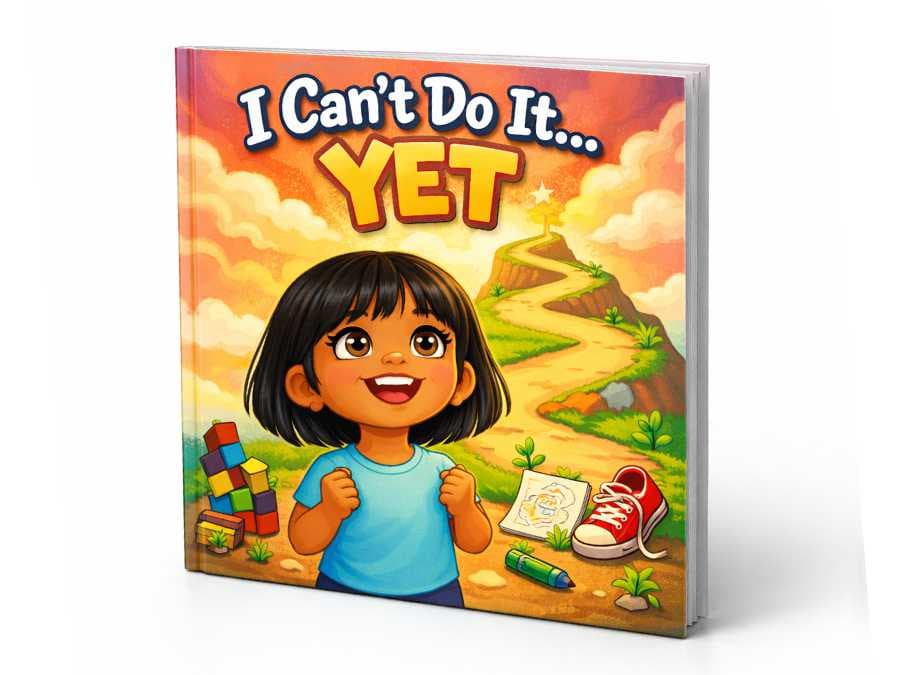
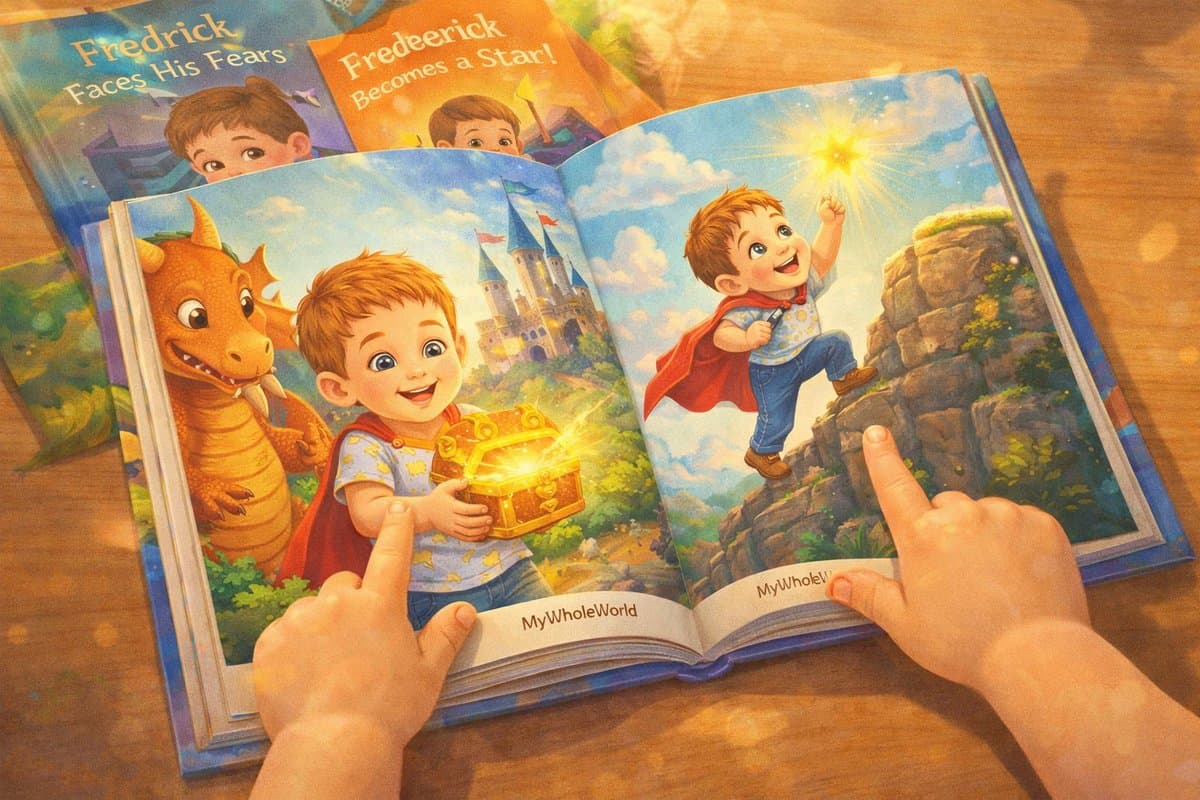
This is also why many parents find that personalized books where their child is the main character get requested over and over again, while generic books might be read once and forgotten. The recognition factor—"that's ME!"—creates an emotional connection that makes reading feel relevant and exciting.
What 2 Year Old Reading Actually Looks Like (Realistic Expectations)
Let's be clear about something important: when we talk about "2 year old reading," we're not talking about a toddler decoding words or sounding out letters. We're talking about emergent literacy—the foundation skills that come before conventional reading.
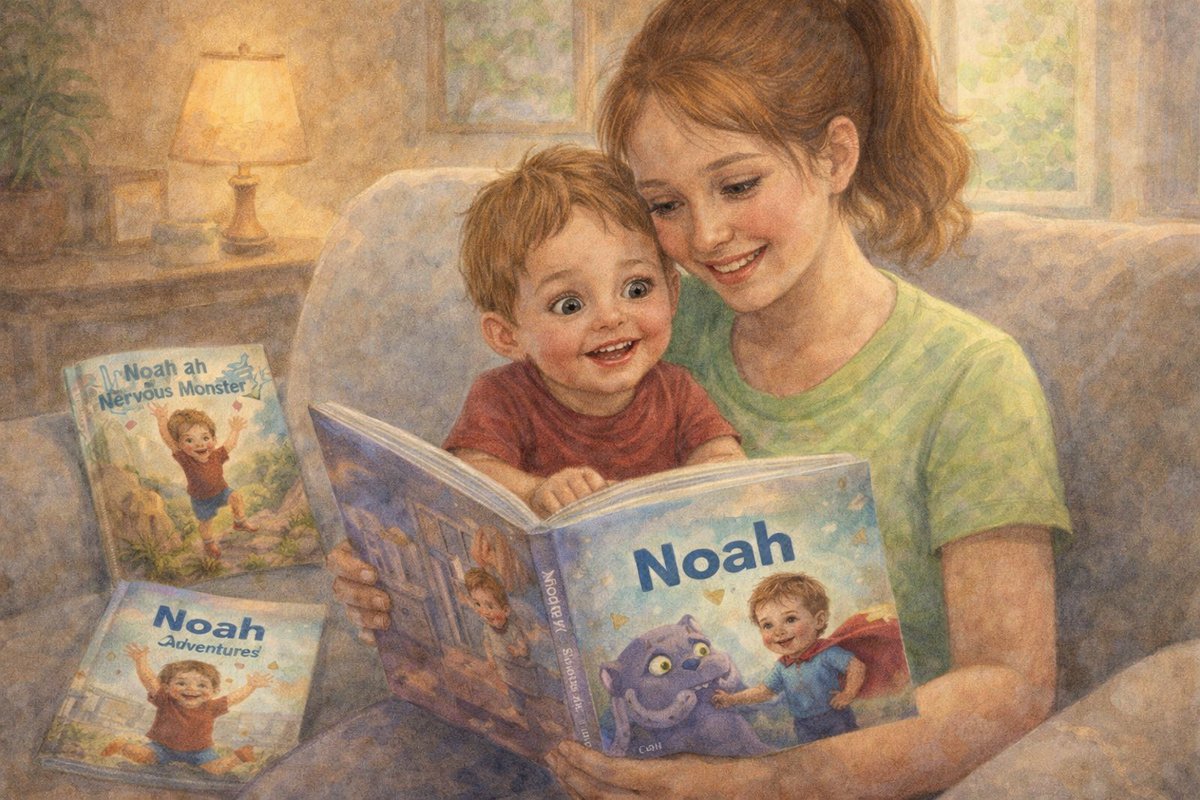
Here's what reading development typically looks like at age two:
What's Normal at 24-36 Months
- Attention span: 2-5 minutes for a single book (and that's on a good day)
- Page turning: Wants to control when pages turn, often too fast for you to finish reading
- Picture recognition: Points to familiar objects and animals in illustrations
- Story participation: Fills in words from favorite books, especially rhyming words or repeated phrases
- Book handling: Holds books right-side up, turns pages (sometimes several at once)
- Pretend reading: "Reads" familiar books to stuffed animals using pictures and memory
- Vocabulary explosion: Learning 5-10 new words per day through conversation and reading
Two-year-olds are also gloriously unpredictable. One day they'll sit through three books. The next day they'll throw the book across the room after one page. Both are normal. The goal isn't perfect attention—it's building positive associations with books and stories.
Red Flags vs. Normal Variation
Most variation in toddler reading interest is completely normal. However, talk to your pediatrician if your two-year-old:
- Shows no interest in books even after repeated, pressure-free exposure over several months
- Doesn't point to pictures when you ask "where's the dog?"
- Isn't saying at least 50 words by 24 months or combining two words by 30 months
- Seems unable to focus on anything (not just books) for even brief periods
Remember: some toddlers are movers who prefer active play, and that's their temperament, not a literacy problem. The key is finding ways to incorporate books into their preferred play style.
Teaching 2 Year Old to Read: Interactive Techniques That Work
Forget sitting still and reading cover-to-cover. Teaching 2 year old to read (or more accurately, teaching them to love books) requires a completely different approach than reading to older children.
The Dialogic Reading Method
This research-backed technique turns reading from a passive activity into a conversation. Instead of just reading the words on the page, you:
- Ask questions: "What's the bear doing?" "Where do you think he's going?"
- Expand their answers: Child says "bear." You say "Yes! That's a big brown bear climbing a tree!"
- Connect to their life: "Remember when we saw a squirrel in our backyard? This squirrel looks like that one!"
- Follow their lead: If they're obsessed with the bus on page 3, talk about the bus. The story can wait.
This approach builds vocabulary and comprehension far more effectively than passive listening. It also keeps toddlers engaged because they're active participants, not just audience members.
The "Point and Name" Game
Two-year-olds are in a naming frenzy—everything needs a label. Use this developmental drive:
- Point to objects in illustrations and name them
- Ask your child to point: "Can you find the red ball?"
- Introduce descriptive words: "That's a TINY mouse" or "Look at the ENORMOUS elephant"
- Count objects: "One duck, two ducks, three ducks!"
This isn't really "reading" the book—it's using the book as a tool for language development. And that's exactly what you should be doing at this age.
Embrace Repetition (Even When You're Bored)
If your two-year-old wants to read the same book 47 times in a row, that's not stubbornness—it's optimal learning. Repetition allows toddlers to:
- Anticipate what comes next (building prediction skills)
- Memorize language patterns and new vocabulary
- Feel competent and confident (they "know" this book)
- Notice new details each time
Pro tip: If you're losing your mind reading Goodnight Moon for the 89th time, try changing your voice, adding sound effects, or asking different questions each time. It keeps you engaged while still giving them the repetition they crave.
Best 2 Year Old Reading Books: What to Look For
Not all books are created equal for the toddler brain. Here's what makes a book ideal for 2 year old reading development:
Format and Physical Features
- Board books: Still the gold standard for this age—durable, easy to handle, wipeable
- Lift-the-flap books: Interactive elements keep hands busy and build fine motor skills
- Touch-and-feel books: Sensory engagement helps with memory and attention
- Appropriately sized: Not so big they can't hold it, not so small they'll eat it
Content Characteristics
- Simple, clear illustrations: Not too cluttered or visually overwhelming
- Repetitive text: Phrases that repeat help with memory and participation
- Rhyme and rhythm: Musical language is easier to remember and more engaging
- Familiar concepts: Daily routines, animals, vehicles, family—things they know
- Minimal text per page: 1-2 sentences max, or you'll lose them
Emotional Resonance
This is where personalization becomes powerful. Two-year-olds are egocentric (developmentally appropriate, not a character flaw)—they're most interested in themselves and their immediate world. Books that feature:
- Characters who look like them
- Situations they recognize (bedtime, meals, playing)
- Their actual name and interests
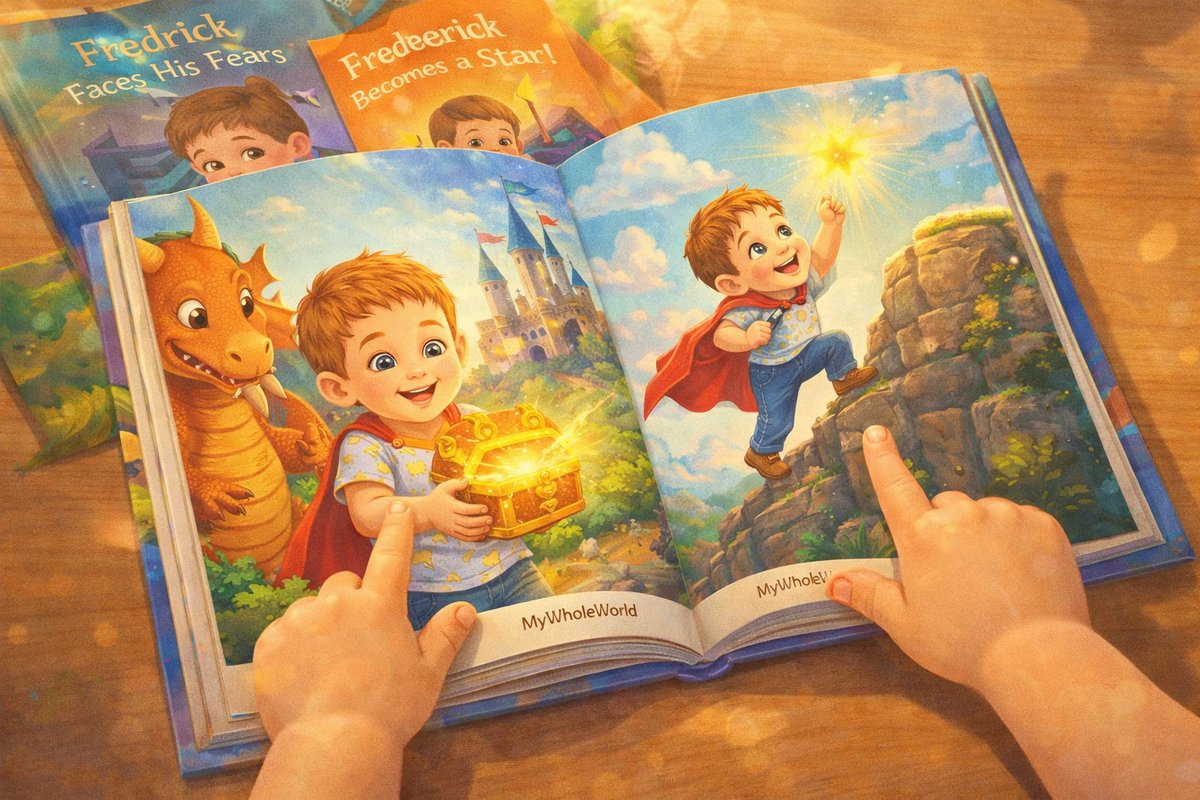
...create an emotional hook that generic books can't match. This is why parents often report that personalized storybooks become the most-requested books in their home—the child sees themselves as the hero, which makes the story feel immediately relevant and exciting.
Your child could be the star of their own story
Personalized books with their name, their face, and the people they love. Preview it free — no payment needed.
Start a Free PreviewCreating a Reading Routine That Actually Works
The research is clear: children who are read to regularly have larger vocabularies, better comprehension, and stronger literacy skills. But "regularly" doesn't mean perfectly. Here's how to build a sustainable reading habit with a two-year-old:
Anchor Reading to Existing Routines
Don't try to create a brand-new 20-minute reading session out of thin air. Instead, attach books to routines you already do:
- Before nap/bedtime: The classic for a reason—quiet, calm, transitional
- After meals: They're strapped in a high chair anyway; capitalize on the captive audience
- During diaper changes: A book can distract from the indignity of being wiped
- Waiting times: Doctor's offices, restaurants, sibling's activities
Make Books Accessible
If books are on a high shelf, they don't exist in your toddler's world. Create book access:
- Low shelves or baskets where they can reach books independently
- Books in multiple rooms (not just the bedroom)
- Rotate books monthly so "new" books appear and old favorites get rediscovered
- Let them see you reading (modeling matters more than lectures)
Follow Their Energy, Not Your Plan
Some days your two-year-old will be a reading champion. Other days they'll have the attention span of a caffeinated squirrel. Both are fine. The goal is exposure and positive associations, not completing books.
If they want to "read" by just looking at pictures, great. If they want to stack books instead of read them, fine—they're still interacting with books. If they walk away after one page, that's okay—you planted a seed.
The Long Game: Why 2 Year Old Reading Matters
Here's what the research tells us: the number of words a child hears before age three is one of the strongest predictors of later academic success. Reading aloud is one of the most efficient ways to deliver rich, varied vocabulary that goes far beyond everyday conversation.
When you read to your two-year-old, you're not teaching them to read right now. You're:
- Building neural pathways that will support literacy for decades
- Creating positive emotional associations with books and learning
- Expanding their vocabulary with words they'd never hear in daily conversation
- Teaching them that stories have structure and meaning
- Showing them that reading is something people who love them do together
And perhaps most importantly, you're giving them something that will matter long after they've learned to read independently: the memory of being held close while someone who loves them shared a story. That's the foundation that makes everything else possible.
Making Reading Personal: The Power of Seeing Themselves in Stories
One of the most powerful things you can do for your two-year-old's reading development is help them see themselves as part of the story world. This is why representation in children's books matters so much—and why personalization can be such a game-changer.
When a toddler opens a book and sees a character who shares their name, looks like them, or faces situations they recognize from their own life, something magical happens. The story isn't happening to some distant character—it's happening to THEM. This recognition creates engagement that generic stories simply can't match.
This is the thinking behind books that celebrate growth mindset or stories about overcoming fears with your child as the hero. When your two-year-old sees themselves being brave, persistent, or kind in a story, it's not just entertainment—it's a rehearsal for real life. They're building their self-concept during these critical mirror years, and stories that reflect them back help them see themselves as capable, loved, and important.
Common Questions About 2 Year Old Reading
Should I be worried if my 2-year-old won't sit still for books?
Not necessarily. Some toddlers are naturally more active and need movement incorporated into reading time. Try reading during bath time, letting them play with toys while you read aloud nearby, or choosing books with actions they can act out. The goal is exposure and positive associations, not perfect attention. If they're meeting other developmental milestones and showing interest in the world around them, their reading interest will likely develop with continued gentle exposure.
How many books should I read to my 2-year-old each day?
Quality matters more than quantity. Even one book per day, read with engagement and interaction, is valuable. That said, many experts recommend aiming for 15-20 minutes of reading time daily, which might be 3-5 short books depending on your child's attention span. Remember: five one-minute reading sessions throughout the day "count" just as much as one five-minute session.
My child only wants the same book over and over. Should I force variety?
No—embrace the repetition! When toddlers request the same book repeatedly, they're doing exactly what their brain needs to cement language patterns, vocabulary, and comprehension. You can gently introduce new books alongside the favorites, but don't take away the beloved repeat-readers. That favorite book is doing important developmental work, even if you're bored to tears.
Your Reading Journey Starts Now
The beautiful thing about 2 year old reading development is that it's never too late to start and there's no single "right" way to do it. Whether you're reading classic board books, acting out stories with puppets, or creating personalized adventures where your toddler is the star, what matters most is the connection you're building and the love of stories you're nurturing.
Your two-year-old won't remember every book you read together. But they'll remember the feeling of being held close, hearing your voice, and knowing that reading time meant being together. That's the foundation that will carry them through every reading challenge they'll face in the years ahead—and it's a gift that starts right now, one page at a time.