Reading for 4 year-olds looks different than you might expect—and that's exactly as it should be. At this magical age, your child is building the foundation for literacy through play, conversation, and yes, books, but not in the way many parents imagine. Understanding what's developmentally appropriate for 4 year old reading can transform story time from a source of anxiety into a joyful connection point that naturally prepares your child for kindergarten.
What Does a 4-Year-Old Reading Level Actually Look Like?
Let's start by releasing the pressure: most 4-year-olds are not reading independently, and that's completely normal. The 4 year-old reading level is actually about pre-reading skills—the building blocks that make reading possible later.
At four, children are typically developing:
- Print awareness: Understanding that text carries meaning, recognizing that we read from left to right and top to bottom
- Phonological awareness: Playing with sounds, rhyming, identifying beginning sounds in words
- Letter recognition: Identifying some letters, especially those in their name
- Vocabulary expansion: Adding 4-6 new words daily through conversation and stories
- Story comprehension: Following plot, predicting what happens next, retelling favorite stories
- Book handling: Turning pages correctly, understanding how books work
Some four-year-olds may recognize sight words or even read simple sentences, while others are still mastering letter sounds. Both are exactly where they should be. The goal isn't early reading—it's building a foundation of skills and, most importantly, a love of books that will carry them through their entire education.
Signs Your 4-Year-Old Is Developing Pre-Reading Skills
Watch for these positive indicators rather than worrying about actual reading:
- Asks to hear the same book repeatedly (this repetition is learning!)
- Pretends to read books to stuffed animals or younger siblings
- Points to words while you read
- Notices letters in the environment ("That sign has an 'M' like in my name!")
- Makes up rhymes or silly words
- Can retell familiar stories in their own words
- Asks questions about the story
Reading Activities for Four Year-Olds That Actually Work
The most effective reading activities for four year-olds don't feel like "learning" at all. They feel like play, conversation, and connection—which is exactly what makes them powerful.
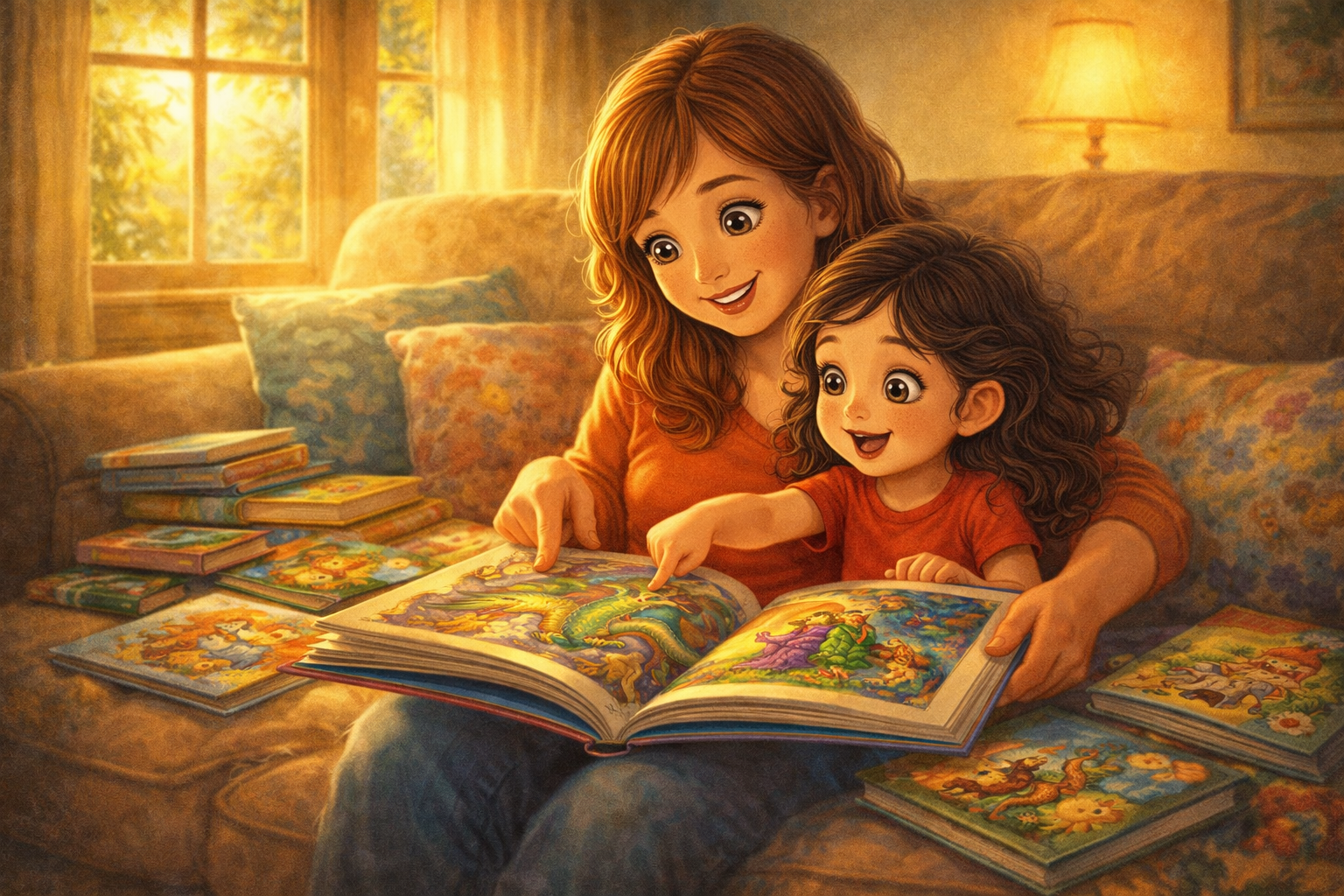
Interactive Read-Aloud Techniques
Transform passive listening into active engagement with these strategies:
Dialogic Reading: Instead of just reading to your child, read with them. Pause to ask open-ended questions: "What do you think will happen next?" "How do you think the character feels?" "Have you ever felt that way?" This builds comprehension and critical thinking far more effectively than straight reading.
Point and Track: Run your finger under words as you read. This teaches left-to-right progression and helps children understand that those squiggles on the page correspond to the words you're saying. Don't make it a lesson—just a natural part of reading together.
Character Voices: Use different voices for different characters. This makes stories memorable, helps children distinguish between speakers, and honestly, it makes reading more fun for you too. Your four-year-old doesn't care if your dragon voice is silly—they care that you're bringing the story to life.
Everyday Literacy Activities
Some of the best 4 year old reading practice happens outside of books:
Environmental Print Hunt: Turn errands into literacy adventures. "Can you find the word 'STOP' on that sign?" "What letter does 'Target' start with?" Children often recognize logos and signs before they recognize letters in books because these words have meaning in their world.
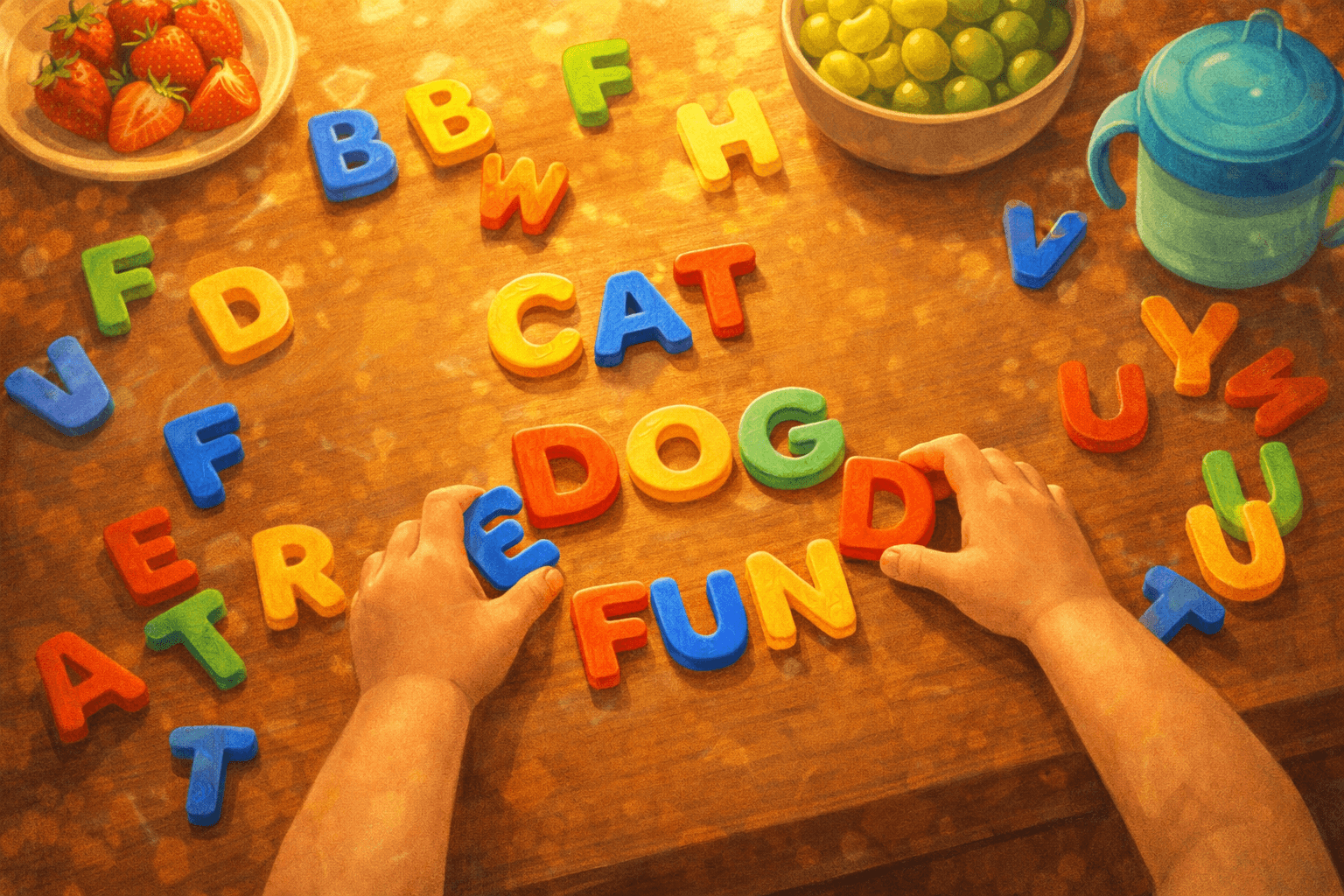
Name Games: Four-year-olds are fascinated by their own names. Write their name on their artwork, help them find their name on their cubby, play with magnetic letters to spell it. Extend this to family members' names, pets' names, and friends' names.
Rhyme Time: Make up silly rhymes during car rides, bath time, or while cooking. "I see a cat wearing a hat eating a... what?" Rhyming is a critical pre-reading skill that builds phonological awareness—and it's naturally fun for this age.
Story Dictation: Let your child tell you a story while you write it down, then read it back to them. This powerful activity shows that spoken words can become written words, and that their ideas are worth recording. Many children are thrilled to see their own stories in print—you might even create a personalized book featuring their original ideas as the hero of their own adventure.
Play-Based Literacy Activities
Learning through play is the most developmentally appropriate approach for four-year-olds:
- Restaurant menus: Create pretend menus for dramatic play. Your child "reads" the menu, takes orders, and writes them down (scribbles count!)
- Treasure hunt notes: Draw simple picture clues with one or two words. "Look under the pillow" with a pillow drawing helps them connect pictures and words
- Puppet shows: Act out favorite stories with puppets or stuffed animals. Retelling stories builds comprehension and sequencing skills
- Letter sensory bins: Hide magnetic letters in rice, sand, or water beads. Finding and naming letters becomes a sensory adventure
Choosing the Right Books for 4 Year Old Reading Development
Not all books serve the same purpose, and that's a good thing. Your four-year-old needs a variety of book types to develop different skills.
What Makes a Great Book for Four-Year-Olds?
Look for these characteristics when selecting books:
Engaging illustrations: At this age, children "read" pictures as much as they listen to words. Rich, detailed illustrations give them plenty to explore and discuss. They'll notice things you miss—the tiny mouse in the corner, the character's expression, the color of the sky.
Predictable patterns: Books with repetitive phrases ("Brown bear, brown bear, what do you see?") allow children to "read" along with you. This builds confidence and reinforces the connection between spoken and written language.
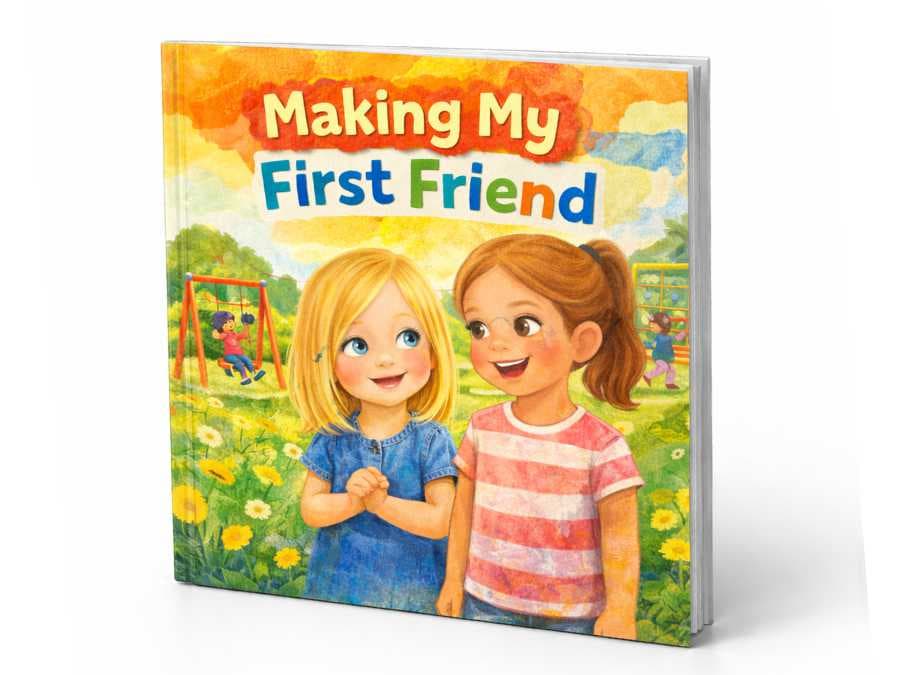
Relatable themes: Four-year-olds are navigating big feelings, new experiences, and growing independence. Books about making friends, managing emotions, or starting school help them process their own experiences.
Rhyme and rhythm: Books with strong rhythm and rhyme are easier to remember and more engaging. They also build phonological awareness—the ability to hear and play with sounds in words.
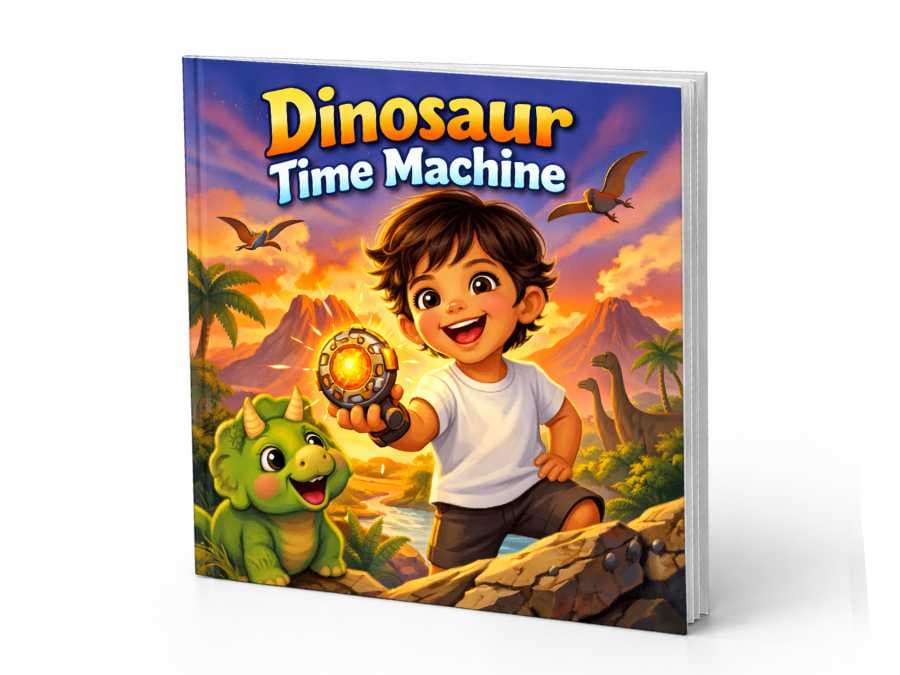
Personal connection: Books where children see themselves—their interests, their family structure, their appearance—are read more often and with more engagement. This is why personalized books can be so powerful; when your dinosaur-obsessed child becomes the hero of a dinosaur adventure, they're not just learning to love reading—they're learning that stories can be about people like them.
Book Types to Include in Your Rotation
Build a diverse home library with these categories:
Alphabet and counting books: But choose ones with substance beyond just "A is for apple." Look for books that tell stories while incorporating letters or numbers, like counting adventures that make numbers meaningful.
Concept books: Books about colors, shapes, opposites, and emotions help build vocabulary and categorization skills that support reading comprehension later.
Narrative picture books: Stories with beginning, middle, and end teach story structure. Choose a mix of realistic fiction and fantasy.
Information books: Four-year-olds are intensely curious. Non-fiction books about topics they love (trucks, animals, space, the human body) build background knowledge that supports reading comprehension across all subjects.
Poetry and song books: The rhythm and repetition in poetry make it memorable and fun to recite together.
The Power of Re-Reading
When your child asks for the same book for the 47th time, they're not being annoying—they're learning. Each re-reading allows them to:
- Notice new details in illustrations
- Anticipate what comes next (prediction is a key comprehension skill)
- Memorize text patterns, which helps them "read" along
- Process themes more deeply
- Build confidence through familiarity
Embrace the repetition. That worn-out book with the torn pages? That's evidence of learning happening.
Your child could be the star of their own story
Personalized books with their name, their face, and the people they love. Preview it free — no payment needed.
Start a Free PreviewCreating a Reading-Rich Environment Without Pressure
The goal at four isn't to create a reader—it's to create a child who loves books and sees reading as a source of joy, not stress.
Make Books Accessible
Keep books where your child can reach them independently. Forward-facing book displays (rather than spines-out on a shelf) make it easier for pre-readers to choose books. Rotate books seasonally to keep the selection fresh without overwhelming them.
Model Reading
Let your child see you reading for pleasure—books, magazines, recipes, anything. Children who see adults reading understand that reading is valuable and enjoyable, not just something kids have to do for school.
Follow Their Interests
If your child is obsessed with construction vehicles, get books about construction vehicles. Passionate interest drives engagement, and engagement drives learning. Don't worry if they want the same topic over and over—deep dives build expertise and vocabulary.
Release the Timeline
Some children read at four. Most don't. Both groups typically read at the same level by second grade. What matters more than early reading is whether your child:
- Enjoys books and story time
- Has a rich vocabulary from conversations and read-alouds
- Understands that reading is meaningful and purposeful
- Feels confident trying new things (including, eventually, reading)
Pressure to read early can actually backfire, creating anxiety around reading that persists for years. Trust the process.
When to Seek Support
While there's a wide range of normal, talk to your pediatrician or a reading specialist if your four-year-old:
- Shows no interest in books even with engaging, interactive reading
- Can't recognize any letters after consistent, pressure-free exposure
- Struggles to follow simple stories or answer basic questions about them
- Has difficulty with rhyming or identifying beginning sounds after lots of playful practice
- Avoids activities that involve fine motor skills (holding books, turning pages, drawing)
Early intervention, if needed, is most effective when started early. But remember: most variation at this age is simply normal development unfolding at different paces.
Making Reading Time Special
In our screen-saturated world, reading time offers something irreplaceable: unhurried, focused connection. Your four-year-old won't remember every book you read, but they'll remember how it felt to snuggle close, hear your voice bringing characters to life, and have your complete attention.
Some families find that personalized books make this connection even stronger. When your child sees themselves as the hero of the story—not just their name inserted into a template, but a character who looks like them, acts like them, and faces challenges that resonate with their real personality—something magical happens. They don't just listen to the story; they live it. They request it again and again because it reflects back to them something powerful: you are seen, you are special, and you are capable of amazing things.
That's the foundation of literacy that matters most—not whether they can decode words at four, but whether they believe that stories (and by extension, learning) are for them.
Your Reading Journey Starts Here
Reading for 4 year-olds is less about achievement and more about connection, curiosity, and joy. Focus on making books a natural, enjoyable part of daily life. Read together, talk about stories, follow your child's interests, and trust that you're building exactly what they need for kindergarten and beyond.
The pre-reading skills your four-year-old is developing right now—vocabulary, comprehension, print awareness, and most importantly, a love of stories—are the true predictors of reading success. You don't need flashcards or pressure. You need books, time, and presence.
Looking for books that will genuinely engage your four-year-old? Browse our collection of personalized stories designed to make your child the hero of adventures that match their interests, personality, and developmental stage. Because the books they request over and over aren't just building literacy skills—they're building a reader.