If you're the parent of a 3 or 4-year-old, you've probably noticed something magical happening: your child is starting to understand that those squiggles on the page mean something. They're pointing at signs, pretending to "read" their favorite books, and asking endless questions about letters and words. Welcome to the world of preschool reading readiness—a critical window when children develop the foundational skills that make learning to read feel natural rather than forced.
Here's the truth that might surprise you: reading readiness isn't about teaching your preschooler to decode words or memorize sight words. It's about creating a rich literacy environment where books feel like treasures, stories spark imagination, and your child develops the pre-literacy skills that make formal reading instruction click when the time comes. Let's explore everything you need to know about supporting your preschooler's reading journey without pressure, worksheets, or stress.
Understanding Pre-Literacy Skills: The Foundation of Reading
Before children can read words, they need to develop a constellation of skills that researchers call "pre-literacy" or "emergent literacy" skills. Think of these as the invisible scaffolding that supports reading development. The beautiful part? You're probably already building these skills during everyday moments with your child.
Print Awareness: Understanding How Books Work
Print awareness is your child's understanding that print carries meaning and follows certain rules. At 3-4 years old, children are learning that:
- Books have a front and back, and pages turn in a specific direction
- Text is read from left to right and top to bottom
- Spaces separate words, and words are made up of letters
- The same word looks the same every time it appears
- Pictures and text work together to tell a story
You can support print awareness simply by running your finger under words as you read, letting your child turn pages, and pointing out environmental print ("Look, that sign says STOP!"). When you create a personalized book featuring your child as the main character, their natural curiosity about seeing their own name in print becomes a powerful motivator for understanding how text works.
Phonological Awareness: Playing with Sounds
Long before children connect letters to sounds, they need to develop an ear for the sounds within words. Phonological awareness includes:
- Rhyming: Recognizing and creating words that sound similar ("cat, hat, sat")
- Alliteration: Noticing when words start with the same sound ("silly, slippery snakes")
- Syllable awareness: Clapping out the beats in words ("el-e-phant" has three claps)
- Sound isolation: Identifying the first, middle, or last sound in a word
The best part? Building phonological awareness happens through playful activities like singing songs, reciting nursery rhymes, and reading books with rich, rhythmic language. No flashcards required.
Vocabulary and Language Development
Reading comprehension ultimately depends on vocabulary—you can't understand what you read if you don't know what the words mean. Preschoolers are vocabulary sponges, typically learning 5-10 new words per day through conversations and stories.
The most powerful vocabulary builder? Rich, back-and-forth conversations about books. When you read together, pause to explain new words, ask open-ended questions ("Why do you think the character felt sad?"), and connect the story to your child's own experiences. This kind of interactive reading builds not just vocabulary, but also comprehension skills and critical thinking.
Creating a Reading-Rich Environment at Home
The environment you create matters more than any single activity or lesson. Children who grow up surrounded by books, who see reading modeled as a pleasurable activity, and who have regular access to quality literature develop stronger literacy skills and more positive attitudes toward reading.
Building Your Home Library: Quality Over Quantity
You don't need hundreds of books—you need the right books. When selecting preschool reading books for your home library, look for:
- Engaging illustrations: Rich, detailed pictures that tell their own story and invite conversation
- Rhythmic, memorable language: Books with rhyme, repetition, and predictable patterns that children can anticipate and "read" along with
- Diverse characters and experiences: Stories that reflect your child's world and introduce them to new perspectives
- Emotional resonance: Books that address real feelings and experiences preschoolers navigate
- Interactive elements: Lift-the-flap books, touch-and-feel textures, or stories that invite participation
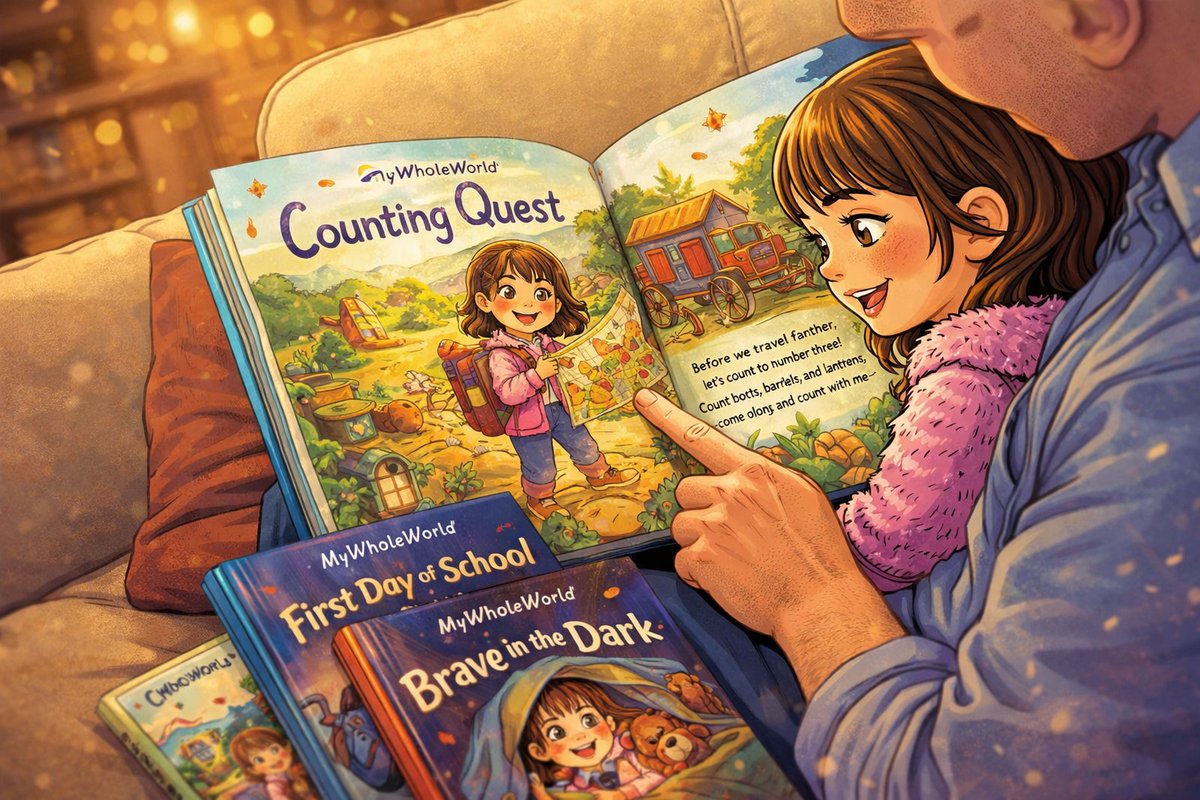
Consider creating a special place in your home for books that feel truly personal to your child. Our Counting Quest adventure, for example, teaches numbers through a story built around your child's actual interests and personality—making math concepts stick because they're woven into a narrative that feels uniquely theirs.
Establishing Reading Routines Without Rigidity
Consistency matters, but so does flexibility. The goal is to make reading feel like a treasured part of your day, not another item on an overwhelming to-do list. Consider these approaches:
Bedtime reading: The classic for good reason. The calm, focused time before sleep is perfect for snuggling with books. Let your child choose the books (even if it's the same one for the 47th time—repetition builds literacy skills!).
Morning story time: Some families find that starting the day with a book sets a calm, focused tone. Even 10 minutes with a picture book can make a difference.
Waiting time reading: Keep books in the car, in your bag, or anywhere you might encounter waiting time. These moments add up.
Follow-your-child reading: Let your preschooler's interests guide book selection. Obsessed with dinosaurs? Read dinosaur books. Fascinated by construction vehicles? Find stories about trucks and diggers. When children see their passions reflected in books, reading becomes irresistible.
Choosing Quality Preschool Reading Resources
Not all preschool reading resources are created equal. In an age of overwhelming options, how do you identify materials that genuinely support literacy development versus those that simply keep kids busy?
What Makes a Book Developmentally Appropriate?
For 3-4 year olds, look for books that:
- Have 200-400 words (enough substance for a real story, but not so long that attention wanders)
- Feature clear, expressive illustrations that support comprehension
- Include some repetitive phrases or refrains that children can anticipate and join in on
- Address themes relevant to preschool life: friendship, emotions, family, growing up, trying new things
- Offer opportunities for interaction—questions to answer, things to find on the page, predictions to make
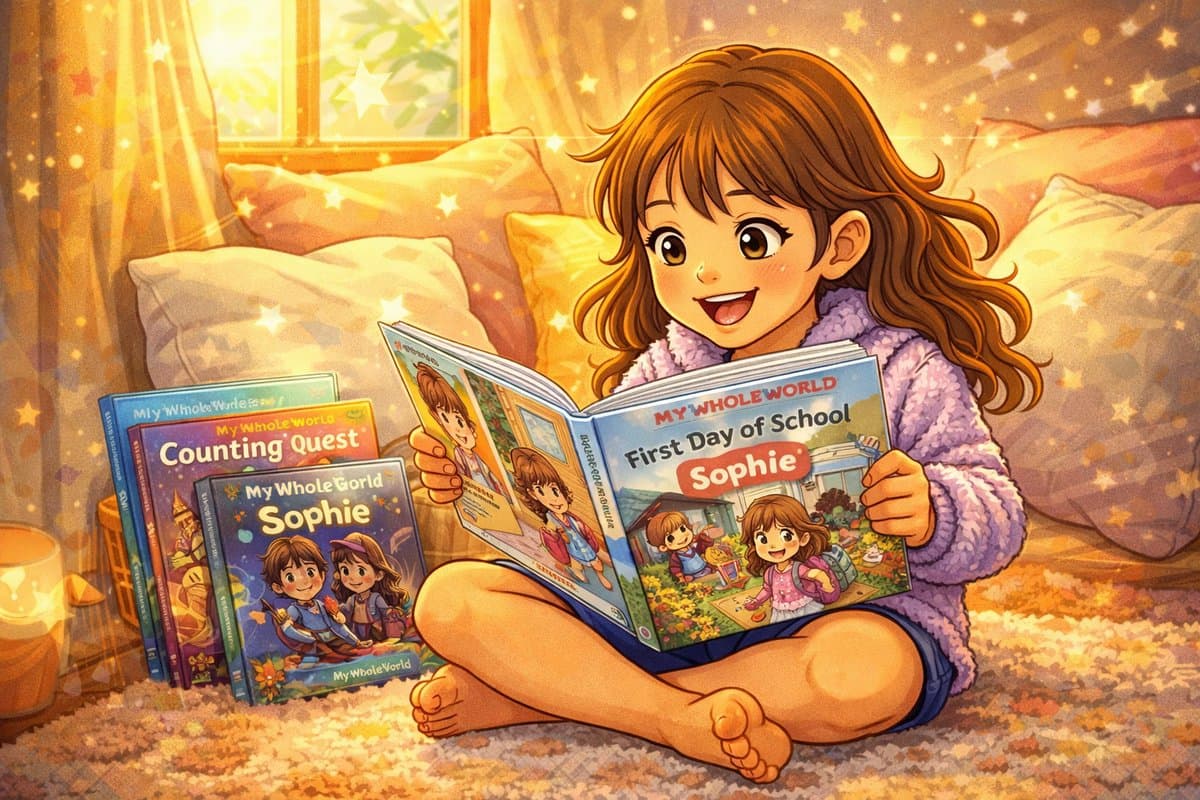
Personalized books can be particularly powerful during the preschool years because they tap into a child's natural egocentrism (in the developmental sense—preschoolers are naturally focused on themselves and their experiences). When your child is the hero of the story, engagement skyrockets. Our First Day of School book, for instance, helps children process the anxiety and excitement of this major milestone by placing them at the center of a story that validates their feelings and celebrates their bravery.
Beyond Books: Supporting Literacy Through Play
Reading readiness develops through more than just book reading. Consider these literacy-rich activities:
- Dramatic play: When children pretend to be characters from stories, they're building narrative comprehension and sequencing skills
- Art and writing materials: Provide crayons, markers, and paper. Preschoolers' scribbles are early writing—encourage them and ask about their "writing"
- Letter play: Magnetic letters, alphabet puzzles, and letter hunts ("Can you find something in this room that starts with 'B'?") make letter recognition playful
- Storytelling: Encourage your child to tell you stories about their day, their drawings, or their imaginative play. Oral storytelling builds the narrative skills that underpin reading comprehension
Your child could be the star of their own story
Personalized books with their name, their face, and the people they love. Preview it free — no payment needed.
Start a Free PreviewThe Preschool Reading Challenge: Building Habits Without Pressure
Many families find success with a preschool reading challenge—but the key is framing it as a fun adventure rather than a requirement. The goal isn't to create reading anxiety; it's to build positive associations and habits.
Creating Your Own Family Reading Challenge
Consider a challenge structure like:
- The 100 Books Challenge: Read 100 books together over the summer (or any 3-month period). Remember, the same book can count multiple times—repetition is valuable!
- The Rainbow Reading Challenge: Read books with covers in every color of the rainbow
- The Genre Explorer Challenge: Try books from different categories—fairy tales, non-fiction, poetry, adventure stories, silly books, bedtime books
- The Library Adventure Challenge: Visit your local library weekly and let your child choose books independently
Track progress with a simple visual chart that your child can help decorate. The act of marking off books or coloring in sections provides a sense of accomplishment and makes reading feel like an exciting project you're doing together.
When Your Child Resists Reading Time
What if your preschooler suddenly doesn't want to read? First, know this is normal. Here's how to respond:
- Remove pressure: If reading has become a battle, take a break. Model reading for your own pleasure without requiring your child to participate
- Change the format: Try audiobooks, library story time, or reading outdoors in a new environment
- Follow their interests obsessively: If they're into trains, read only train books for a while. Engagement matters more than variety
- Make it social: Invite a friend over for a "book party" or read to stuffed animals together
- Check the books: Are they too long? Too babyish? Not interesting? Sometimes resistance signals a mismatch between books and child
What Reading Readiness Is NOT
Let's be clear about what we're not trying to accomplish during the preschool years:
Reading readiness is NOT formal reading instruction. You don't need to teach letter sounds systematically or drill sight words. Some preschoolers will naturally start recognizing words—wonderful! But it's not a requirement or even necessarily advantageous. Research shows that children who learn to read at 4 versus 6 show no long-term differences in reading ability or academic achievement.
Reading readiness is NOT about performance. Resist the urge to quiz your child ("What letter is this?" "What sound does it make?"). Questions can turn reading time into test time. Instead, make observations ("I see the word 'cat' has three letters") and follow your child's lead.
Reading readiness is NOT a race. Every child's literacy journey unfolds on its own timeline. Some 3-year-olds are intensely interested in letters; others won't care until 5 or 6. Both paths are completely normal and healthy.
The Secret Ingredient: Your Child Feeling Seen
Here's something that doesn't always make it into literacy research but that parents know instinctively: children engage more deeply with stories when they see themselves reflected. This is why representation in children's literature matters so much—and why personalized books can be uniquely powerful during the preschool years.
When a child opens a book and discovers that they are the hero, that their actual personality traits drive the plot, that their real interests and quirks are celebrated on the page—something magical happens. Reading becomes not just about decoding words or following a story, but about identity formation and self-recognition.
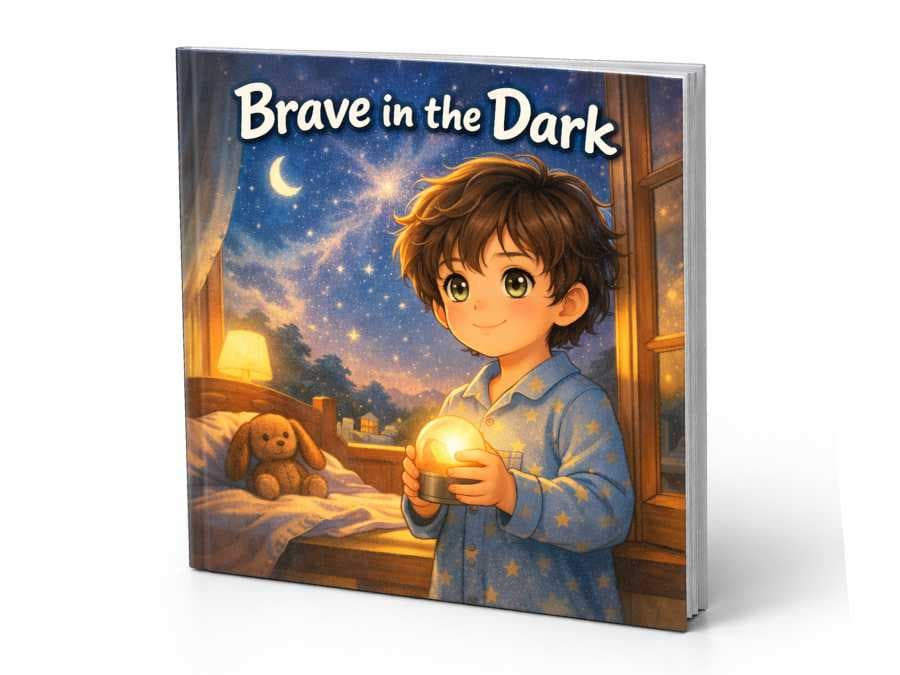
This is the philosophy behind every book we create at MyWholeWorld. Whether it's helping a cautious child discover their bravery in Brave in the Dark or celebrating a child's growing independence in All the Places Mom's Love Goes, we believe that books should mirror children back to themselves—not as generic characters with their name inserted, but as the unique, irreplaceable individuals they are.
Moving Forward: Your Preschool Reading Journey
Reading readiness isn't about checking boxes or meeting milestones on schedule. It's about creating an environment where books are treasured, where stories spark imagination, where your child develops the foundational skills that make reading feel natural and joyful when formal instruction begins.
Focus on these essentials:
- Read together daily, even if just for 10-15 minutes
- Choose books that genuinely engage your child, not just books that seem "educational"
- Talk about stories—ask questions, make predictions, connect books to your child's life
- Model reading as a pleasurable activity in your own life
- Celebrate your child's emerging literacy skills without pressure or comparison
- Trust that your child is exactly where they need to be
Remember: you're not preparing your child for a test. You're opening a door to a lifelong relationship with reading—one where books are friends, stories are adventures, and your child knows that their own story matters most of all.
Ready to create a reading experience that's truly personal? Explore our collection of personalized books that celebrate your child's unique personality, interests, and journey. Because the most powerful reading experiences happen when children see themselves—their whole selves—reflected on the page.