

If you've ever wondered whether tracking your child's reading actually helps—or if it just adds one more thing to your parenting to-do list—you're not alone. A kids reading log can be a powerful tool for building consistent reading habits, but only when it's done in a way that motivates rather than pressures. The key is finding the right approach for your child's age, personality, and reading stage.
Why Use a Kids Reading Log? The Benefits Beyond Counting Books
A reading chart for kids isn't just about tallying up titles—it's about creating visibility around a habit you want to nurture. When children see their reading progress visualized, something powerful happens: reading shifts from an invisible activity to a tangible achievement they can feel proud of.
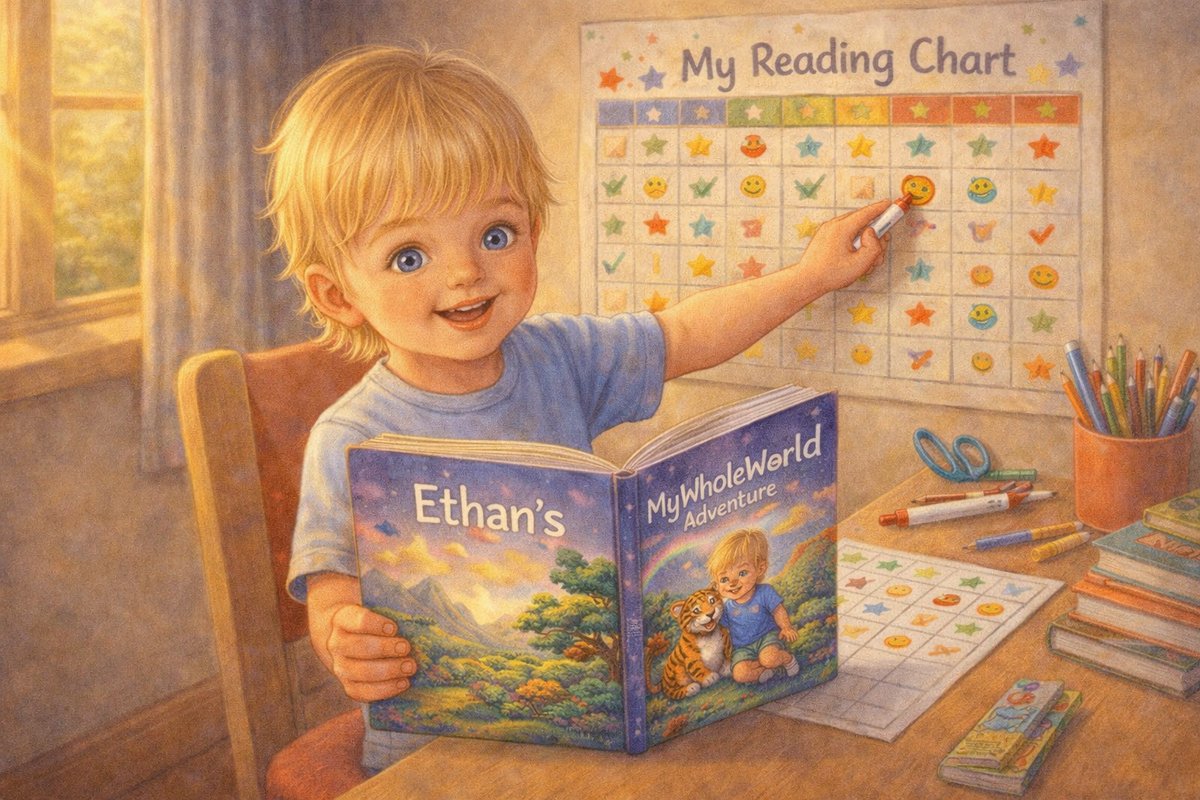
For parents, a kids reading chart provides insights you might otherwise miss. You'll notice patterns like "she only wants to read dog books" or "he avoids reading on Tuesdays when soccer practice wears him out." These observations help you support your child's reading journey more intentionally.
Research shows that children who track their reading—even informally—read more consistently than those who don't. But here's the critical part: the tracking itself isn't magic. It works because it creates a feedback loop that makes reading feel rewarding. Your child finishes a book, adds it to their log, and experiences a small moment of accomplishment. That feeling becomes associated with reading itself.
The benefits extend beyond just reading more books. Tracking helps children develop metacognitive skills—they start noticing their own preferences, stamina, and growth. A six-year-old who realizes "I used to only read picture books but now I can read chapter books!" is building self-awareness and confidence that extends far beyond literacy.
Age-Appropriate Reading Tracking Methods (What Actually Works)
For Preschoolers (Ages 2-4): Keep It Visual and Immediate
A preschool reading challenge should be almost entirely visual and require zero writing. At this age, children can't yet track independently, so you're really creating a system that makes reading visible and celebratory.
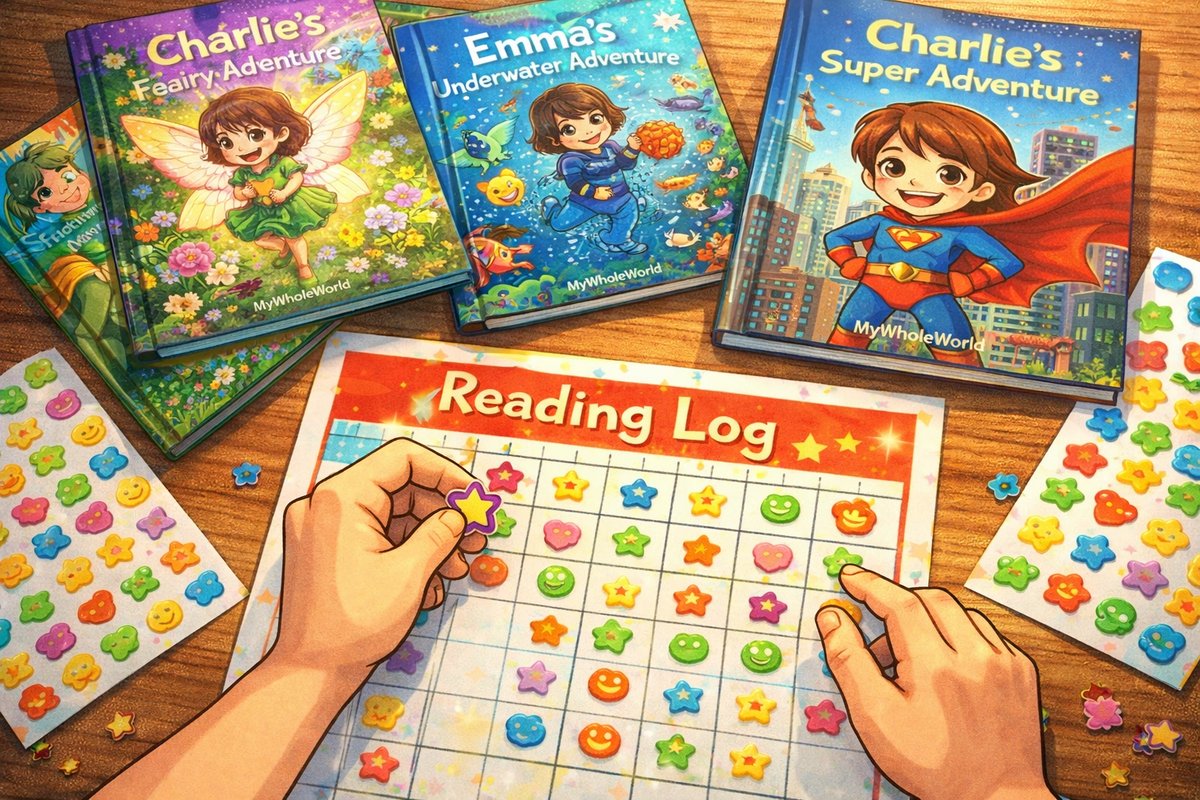
What works:
- Sticker charts: One sticker per book read together. Use a simple grid or a themed chart (like a caterpillar that grows longer with each book)
- Marble jars: Add a marble to a clear jar after each reading session. When it's full, celebrate with a library trip or special reading time
- Picture logs: Take photos of your child with each book and create a simple photo collage they can see
- Stamp cards: Like a coffee shop punch card—get a stamp for each book, earn a "prize" (extra bedtime story, choose the next book, etc.) after 10 stamps
The goal at this age isn't independent tracking—it's building positive associations with reading and creating a ritual around books. When your three-year-old gets excited to add their sticker after storytime, you're building neural pathways that connect reading with reward and accomplishment.
For Early Elementary (Ages 5-7): Introduce Simple Self-Logging
This is the sweet spot for a kids reading log. Children are developing writing skills and love the independence of tracking their own progress, but they still need systems that are simple and visual.
What works:
- Title-only logs: A simple list where they write just the book title (or you write it if they dictate). Don't require ratings, summaries, or dates yet
- Reading bingo: A bingo card with categories like "a book about animals," "a book that made you laugh," "a book with a red cover." This adds variety without feeling like homework
- Colorful reading charts: Each book gets a colored square or segment. Watching the chart fill with color provides visual satisfaction
- Minutes-based tracking: For emerging readers, tracking 20 minutes of reading time (regardless of how many pages) removes pressure about reading speed
At this age, consider incorporating personalized books into your reading routine. When children see themselves as the hero of their own story, they're more likely to request that book repeatedly—and those re-reads absolutely count toward reading goals. In fact, re-reading builds fluency and comprehension more effectively than always pushing forward to new books.
For Older Elementary (Ages 8+): Add Reflection and Goal-Setting
Older children can handle more sophisticated tracking that includes reflection, but be careful not to make it feel like a school assignment. The reading log should enhance their reading life, not bureaucratize it.
What works:
- Reading journals: Title, author, date finished, and one sentence about what they thought. Keep it brief
- Star ratings: A simple 1-5 star system helps them start thinking critically about what they like and why
- Genre tracking: Help them notice if they're reading widely or sticking to one type of book (neither is wrong, but awareness is valuable)
- Personal reading goals: Let them set their own goals—"read 3 books this month" or "try a graphic novel" or "read the whole series"
Creating a Kids Reading Challenge That Motivates (Not Pressures)
The difference between a kids reading challenge that builds lifelong readers and one that backfires comes down to how you frame it. Here's what works:
Make It About Exploration, Not Competition
Avoid challenges that pit children against each other ("who can read the most books"). Instead, frame challenges around discovery: "Can we read books by 10 different authors this summer?" or "Let's find books about 5 different countries."
Family reading challenges work beautifully because everyone participates at their own level. Create a shared chart where each family member tracks their reading. Your kindergartener adds picture books, your fourth grader adds chapter books, and you add your own books. This normalizes reading as something everyone does, not just a kid activity.
Set Realistic, Personalized Goals
A child who currently reads 2 books per month shouldn't be challenged to read 20. That's not motivating—it's discouraging. Instead, aim for a 25-50% increase: if they typically read 2 books monthly, challenge them to read 3.
Consider creating goals based on your child's interests. If they're obsessed with dinosaurs, a challenge to "read 5 different dinosaur books" feels exciting, not obligatory. You might even create a personalized book where they're the paleontologist discovering new species—making them part of the reading challenge in a deeper way.
Celebrate Milestones Without Making Everything Transactional
Rewards can be tricky. You want to celebrate progress without teaching your child that reading only matters if there's a prize at the end. The best "rewards" are reading-related: a new bookmark, a library trip to choose any book they want, an extra bedtime story, or a special reading date at a bookstore café.
Avoid cash rewards or toys unrelated to reading. These create extrinsic motivation that can actually decrease intrinsic love of reading over time. The goal is for reading itself to become rewarding.
Free Printable Reading Log Templates and Charts
You don't need anything fancy to start tracking. Here are simple templates you can create or find free online:
- Basic reading log: Three columns—Date, Title, Minutes Read. Print a simple table and keep it on a clipboard
- Monthly reading calendar: A calendar grid where kids color in each day they read. Aim for 20+ days per month
- Reading thermometer: Draw a large thermometer and fill it in as books are completed. Set a goal at the top (like "20 books by summer")
- Reading tree: Draw a tree trunk and branches. Each book becomes a leaf or apple added to the tree
- Genre rainbow: Create a rainbow with different colored arcs. Each arc represents a genre—color it in as you read books from that category
The most effective reading chart for kids is one your child helps design. Sit down together and ask: "What would make tracking your reading fun?" Their investment in creating the system dramatically increases the likelihood they'll actually use it.
Your child could be the star of their own story
Personalized books with their name, their face, and the people they love. Preview it free — no payment needed.
Start a Free PreviewWhen Reading Logs Help vs. When They Backfire
Here's the truth many parenting articles won't tell you: reading logs don't work for every child, and that's okay.
Signs Tracking Is Working
- Your child voluntarily updates their log and seems proud of their progress
- They're reading more consistently than before you started tracking
- They talk about their reading goals or milestones
- The log sparks conversations about books ("I noticed you loved this series—want to find similar books?")
Signs Tracking Is Backfiring
- Your child resists reading because "I don't want to write it down"
- They're choosing shorter books just to add more titles to their log
- Reading has become a chore associated with record-keeping
- They're anxious about meeting goals or comparing themselves to siblings
- You're nagging about updating the log more than celebrating the reading
If you see these red flags, stop tracking immediately. No reading log is worth damaging your child's relationship with books. Take a break for a few months, then consider whether a different, lighter approach might work—or whether your child is simply someone who reads better without external tracking systems.
Some children are naturally motivated by tracking and data. Others find it constraining and prefer reading to be spontaneous and unmeasured. Neither approach is wrong. Your job is to notice which type of reader your child is and support them accordingly.
Using Reading Logs to Identify Patterns and Support Growth
Beyond motivation, a kids reading chart becomes a valuable diagnostic tool when you review it periodically. Here's what to look for:
Reading stamina patterns: Is your child consistently reading for 10 minutes before losing focus? That's valuable information. You can gradually build stamina by adding just 2-3 minutes per week.
Genre preferences and avoidances: If your log shows 15 fantasy books and zero nonfiction, that's not necessarily a problem—but it might be worth introducing high-interest nonfiction to expand their reading diet.
Difficulty level trends: Are they consistently choosing books that are too easy or too hard? The right reading level should feel mostly comfortable with occasional challenge.
Time-of-day patterns: Some kids read better in the morning, others before bed. Your log might reveal the optimal reading window for your child.
Seasonal fluctuations: Many children read more in summer and less during busy school months. Knowing this helps you adjust expectations and plan accordingly.
These insights allow you to support your child's reading development more strategically. If you notice they abandon every book over 100 pages, you might introduce engaging shorter chapter books or graphic novels as a bridge. If they only read at bedtime when they're exhausted, you might carve out a weekend morning reading ritual.
Making Reading Tracking a Family Ritual
The most successful reading logs aren't isolated kid activities—they're woven into family culture. Consider these approaches:
Weekly reading check-ins: Sunday evening, everyone shares what they're reading and updates their logs together. Make it cozy—hot chocolate, comfortable seating, no pressure.
Reading challenges as family adventures: "This month, everyone reads a book set in a different country." Then share what you learned at dinner.
Shared reading space: Create a family reading corner with everyone's current books and reading logs visible. Seeing parents read and track their own books normalizes the practice.
Book celebrations: When someone finishes a book, they get to share their favorite part with the family. This makes completing books feel significant beyond just adding a title to a list.
When reading tracking becomes a family practice rather than a kid requirement, it loses any feeling of being homework and becomes simply "what we do in this family."
Building Readers, Not Just Tracking Books
At the end of the day, a kids reading log is just a tool—and like any tool, its value depends on how you use it. The goal isn't to create children who can report impressive reading statistics. The goal is to nurture humans who reach for books when they're curious, sad, bored, or excited. Who see reading as a source of comfort, adventure, and understanding.
If tracking helps your child build that relationship with books, it's worth doing. If it doesn't, let it go without guilt. Some of the most voracious readers never track a single book. What matters is that your child sees reading as something valuable, enjoyable, and worth making time for.
As you support your child's reading journey, consider how personalized books can make reading feel even more special. When children see themselves as the hero of their own story—with their actual interests, personality traits, and appearance woven into the narrative—reading becomes deeply personal. These aren't just books to add to a log; they're stories that reflect back to your child that they're seen, valued, and capable of amazing things.
Whether you use a simple sticker chart or an elaborate reading journal, remember: you're not just tracking books. You're building a reader. And that's worth celebrating, one page at a time.